Halloween: A Season of Its Own | Faunia


At Parques Reunidos, education goes far beyond the classroom. Across our parks, aquariums and attractions, learning comes to life through experience, curiosity and real-world connection.
As part of our Learning That Leaves a Mark series, we are highlighting the educators who design and lead these experiences every day. Their work helps turn visits into moments of discovery, awareness and long-term impact.
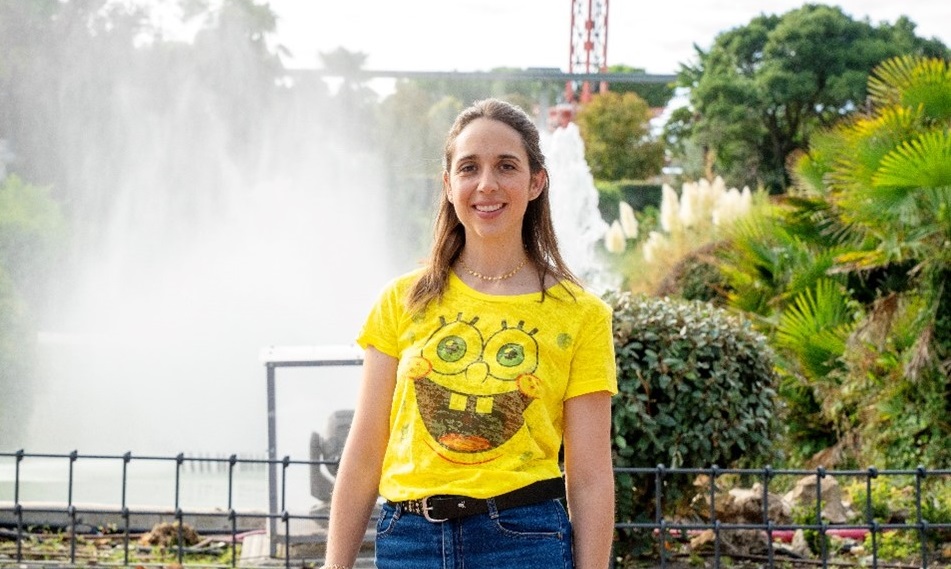
In this interview, María Tocino, Head of Customer & Sales at Parque de Atracciones de Madrid, shares how education at the park inspires curiosity, responsibility and a deeper understanding of the world around us.
Why was it important to take physics out of textbooks and bring it into an amusement park?
At Parque de Atracciones de Madrid, we believe it is essential to take physics out of the classroom and make it tangible and easy to understand. By placing it in an unexpected yet familiar environment for students — an amusement park — concepts stop being abstract and become real experiences. During Physics Days, students can see practical applications explained by expert teachers in an engaging and surprising setting, something they do not expect and that naturally captures their attention. Moreover, there were no initiatives like this in Madrid, so these Physics Days were created with a clear pioneering spirit.
What changes when people experience scientific principles instead of just learning about them?
It completely changes the way people learn and, above all, the way they remember. When scientific principles are experienced first-hand, content retention increases significantly and understanding becomes much more intuitive. The experience also becomes unforgettable, making it easier for concepts to be absorbed naturally and stay in memory over time.
During Physics Days, which moment usually sparks the most curiosity or surprise?
Without a doubt, the participatory experiments. It is especially striking when teachers explain the physics behind each attraction in our Grand Theatre Auditorium and students, sometimes as volunteers, experience those concepts themselves. The moment they get on a ride and understand which forces are acting on them creates a strong impact and sparks a great deal of curiosity.
How do initiatives like this help young people see science as something accessible rather than intimidating?
These Physics Days remove the barrier of difficulty that many people associate with physics. By seeing and experiencing real-life applications, students “bring the concepts down to earth” and make them their own. Physics stops being linked solely to textbooks or distant laboratories and becomes something close, everyday and understandable, learned through experience.
If someone leaves the park seeing physics differently, what would you like them to think or feel?
That is precisely one of the main goals of Physics Days: to change the perception of physics as a complex and inaccessible subject. We would like students to leave understanding how some of their favorite rides work — such as Tornado, Flying Chairs or La Máquina — and to discover physics applied to everyday situations and places. And if, on top of that, we awaken their curiosity to learn more and their desire to keep exploring, then the objective has truly been achieved.