Halloween: A Season of Its Own | Faunia
At Parques Reunidos, education goes far beyond the classroom. Across our parks, aquariums and attractions, learning comes to life through experience, curiosity and real-world connection.
As part of our Learning That Leaves a Mark series, we are highlighting the educators who design and lead these experiences every day. Their work helps turn visits into moments of discovery, awareness and long-term impact.
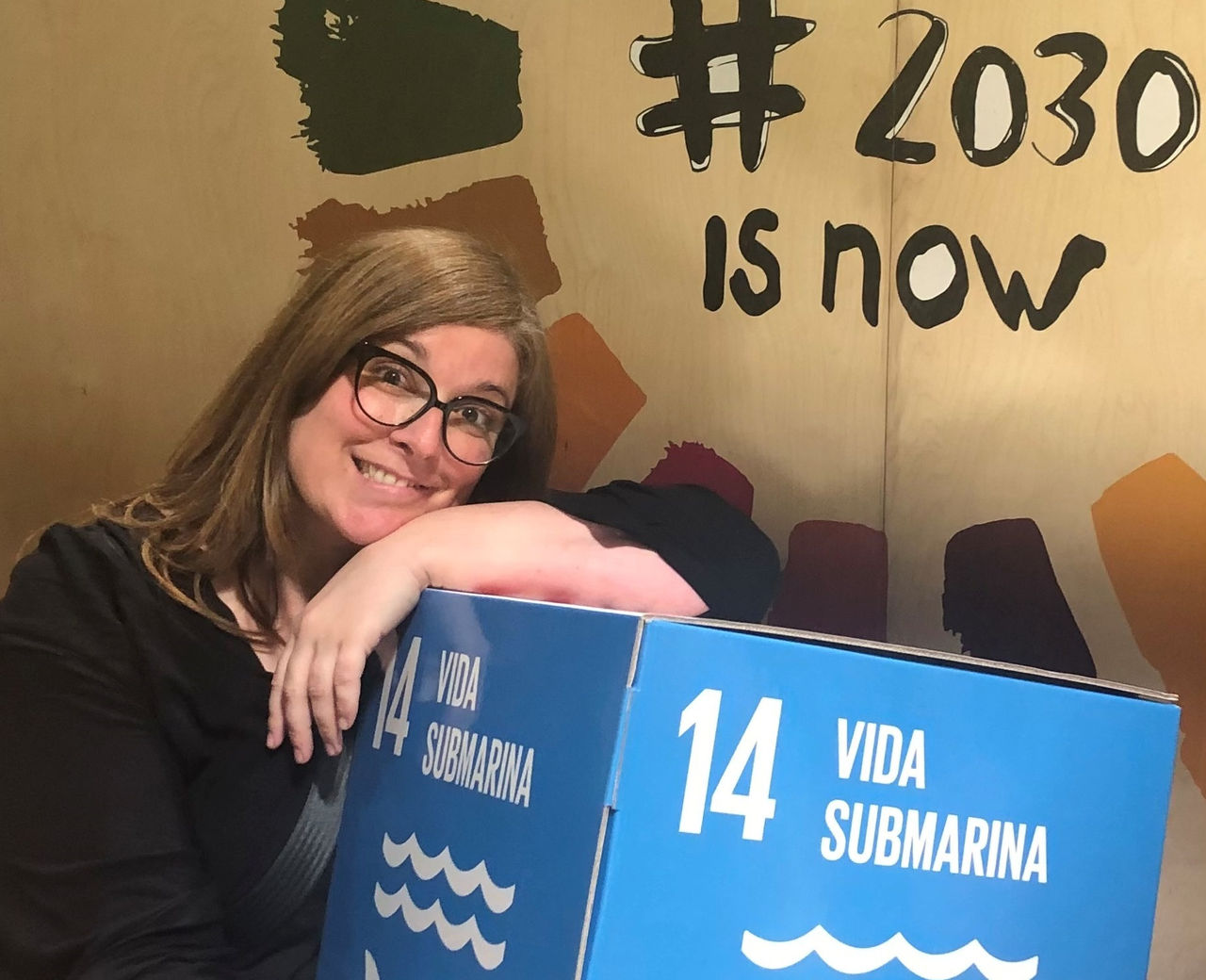
In this interview, Paula Calatrava, Head of Education and Social Impact at Atlantis Aquarium, shares how education at the park inspires curiosity, responsibility and a deeper understanding of the world around us.
What is the educational philosophy behind Atlantis Aquarium’s school programs?
The goal of the Education Department has always been to shape citizens who are aware, responsible, and committed to the conservation of the marine environment, fostering a deep connection with nature and respect for all forms of life. To achieve this, all our activities are designed according to the principles of experiential learning (hands-on, hearts-on), values education (respect, responsibility, cooperation, and sustainability are fundamental for every aspect of life, not just environmental issues), and connection with nature (linking our daily lives with nature, being aware of the impact our actions have on the environment and vice versa). The educator plays a key role in all of this, acting as a guide and facilitator of learning. They do not simply transmit information but accompany the student in building their own knowledge, encouraging curiosity, critical thinking, and reflection. All of this, without forgetting that we are in a leisure environment, relaxed, and that all activities are designed so that learning is, above all, playful.
How do you combine interactivity with scientific learning?
The combination of interactivity and scientific learning is achieved through methodologies that involve the active participation of students in research and experimentation processes. As mentioned earlier, activities are designed so that students manipulate materials, observe phenomena, and record data, allowing them to apply the scientific method in a hands-on way. In other cases, the educator poses open-ended questions and challenges that stimulate curiosity, promoting hypothesis formulation and evidence gathering. Sometimes, students design solutions to real environmental problems, integrating scientific knowledge and collaborative skills. All of this is always adapted to different age groups. Additionally, we are fortunate to have simulations, augmented reality, and interactive digital panels that make it easier to understand complex processes.
During a guided visit or workshop, how do you help students connect ocean conservation with everyday decisions they can make at home?
Through examples, dynamics, games, and reflections… together we deduce and discover where the oxygen we breathe comes from, where the trash we throw away ends up and how it gets there, and where our food originates. We name many scientific phenomena that are directly linked to our survival and the survival of the oceans, becoming aware of the impact our actions have on these phenomena.
Which parts of the aquarium experience tend to spark the most reflection or questions among students?
Every person is different, and each student is curious about something unique. However, there are ecosystems and animals that tend to be common points of interest (sharks, axolotls, coral reefs, seahorses…).
Atlantis also organizes sessions for teachers. What is the value of offering them this preview and context before bringing their class?
There is a practical aspect to these visits, more related to space and resources, which always gives teachers peace of mind. Anticipating the visit is always important, especially when you are responsible for a group of students. On the other hand, knowing the content and methodology in advance is very useful because it allows teachers to work on the visit with their students before the excursion day. This represents a significant improvement when working on content with them, as it enables a much more complete visit at all levels.
What role does interactive technology or hands-on learning play in helping young people understand complex marine ecosystems?
Interactivity and technology are among the tools we use to achieve our ultimate goal: for students (and non-students) to develop skills and attitudes that enable them to become agents of change, capable of making responsible decisions for the conservation of the planet.
Our methodology is based on:
· Active Learning: Workshops, experiments, and activities involving direct participation.
· Inquiry and Discovery: Students explore, ask questions, and reflect to understand natural phenomena and marine ecosystems.
· Collaborative Work: To promote teamwork, strengthen cooperation, and mutual respect.