Halloween: A Season of Its Own | Faunia


Tropical Islands made history at the end of 2025. Our Aquatics team led the park to become the first facility in Germany to successfully pass the Ellis & Associates (E&A) aquatic safety audit, conducted by Safety Skills Training (SST), achieving an outstanding rating across all areas of drowning prevention, emergency response, and aquatics management.
The E&A audit is an internationally recognized assessment designed to evaluate the preparedness of aquatic facilities across three dimensions:
Auditors conducted individual and random performance evaluations to test real-time vigilance and consistency across the lifeguard team. A daily rotation system, implemented to ensure guards change posts every hour across seven different positions, proved instrumental in maintaining focus and preventing fatigue.
In addition, the ‘on-site feedback’ program implemented by the Aquatics leadership team strengthened real-time learning. Positive behaviors are reinforced immediately, while distractions are corrected through coaching on the spot. This continuous cycle of feedback is significantly increasing motivation and operational excellence across the team.
During the emergency-response phase of the audit, evaluators analyzed the full procedure from the moment an alert is triggered to the execution and completion of rescue maneuvers. Tropical Islands’ strong results stem from a daily training system, where groups of lifeguards practise key rescue techniques and rehearse real-life scenarios through simulation.
The audit also included a comprehensive review of all documentation and administrative processes.
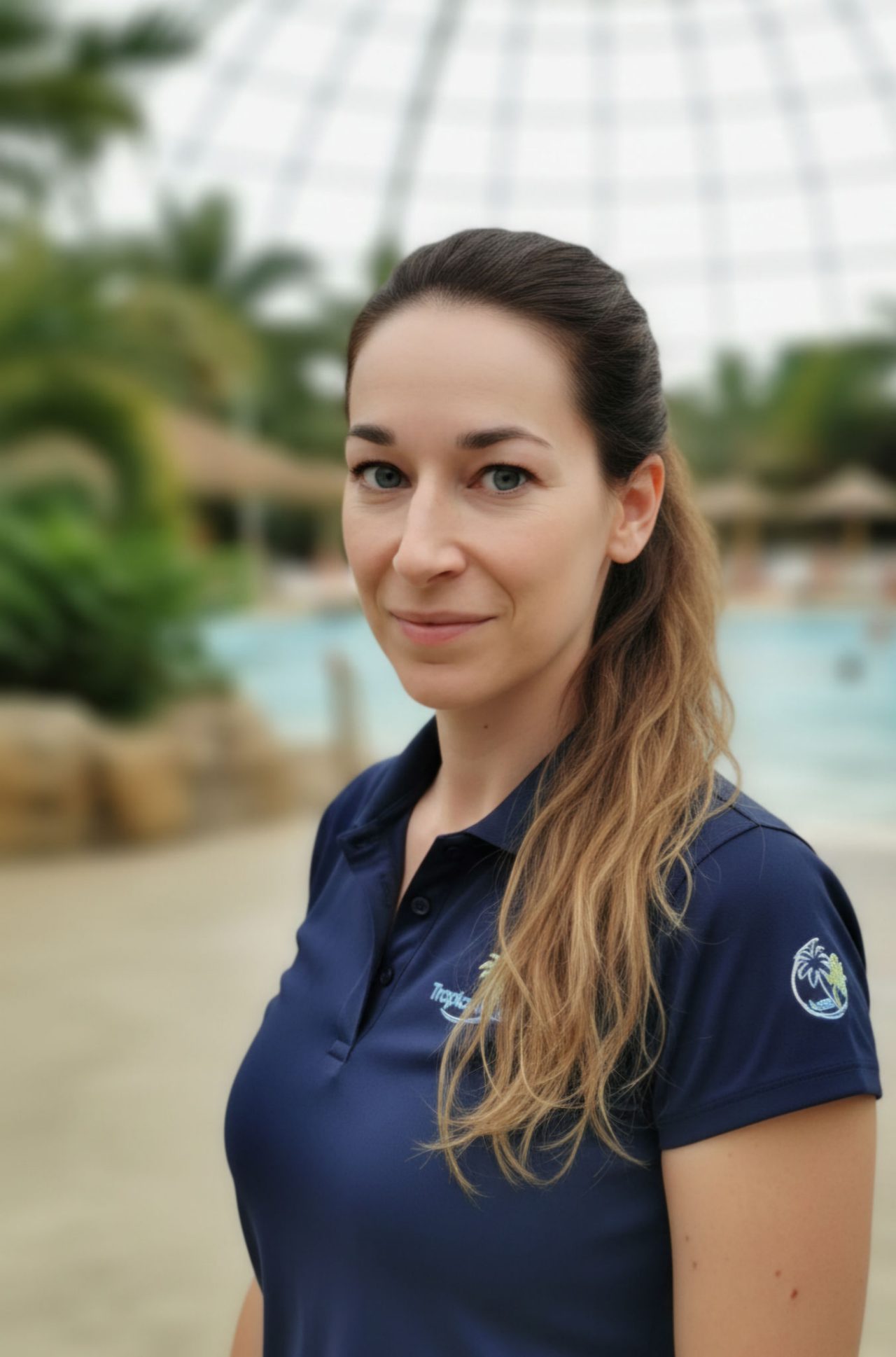
We spoke with Lifeguards Supervisor Sandy Leitner to know more about this success story.
What does it mean to you — and to the team — to be the first facility in Germany to achieve this certification?
For me personally, and for the entire team, being the first facility in Germany to pass this audit fills us with pride and motivation. It was one of our major goals, and the team is very happy with the result and with the recognition of their dedication and efforts to improve every day.
This is something we have worked hard for over the last few months, and we achieved it by working together as a team like never before.
This achievement is not only a goal reached, but also a benchmark that sets the minimum standard we must — and want to — maintain at Tropical Islands regarding the water safety of our guests.
We are proud to say that Tropical Islands is a safe facility, recognized by an external company with very high quality standards.
Sharper Focus Through Smart Rotations
One of the elements highlighted during the audit was the dynamic rotation system implemented by the Aquatics leadership team. Lifeguards switch posts every hour, moving through seven different positions each day. This approach keeps concentration high, reduces fatigue, and creates a more engaging rhythm of work.
What impact have you seen the rotation system have on the team’s focus and energy levels?
The rotation system has had a very positive impact on the team's concentration and energy levels. Since we implemented it in March and April, and with the latest adjustments we have made in recent weeks, we have noticed both greater concentration among the lifeguards and increased motivation within the team. Our lifeguards now work in a dynamic environment where they change positions every hour, can reliably plan their break times, and experience different attractions and positions throughout the day.
We can say that the rotation system has significantly improved working conditions for our lifeguards and operators.
Was there a moment during the audit where you felt the rotation model truly made a difference?
Not during the audit process itself, because these audits are unannounced, so we do not know when we are being audited.
However, we can see that the rotation system has made a big difference compared to last year, for example, when our lifeguards did not change positions more than once or twice per shift. After several months of using the rotation system, the improvement is clear.
The rotation system has definitely been a fundamental factor in enabling our lifeguards to work in a way that ensures the safety of our guests is always guaranteed — and through this, we were able to pass the audit.
Real-Time Coaching Through the ‘On-Site Feedback’ Program
Another key factor in Tropical Islands’ success was the introduction of the on-site feedback program. Lifeguards receive immediate reinforcement for strong behaviors, and distractions are corrected on the spot through coaching and guidance.
This continuous cycle of learning has significantly increased motivation, consistency, and team confidence.
How did the team respond to receiving real-time feedback?
This has been a key element in the process. As we are a facility that never closes and is open to the public 365 days a year, 24 hours a day, it is impossible to train 100% of the team members at the same time.
Therefore, to move forward and make greater progress in less time, our manager and the entire team of supervisors decided that, in addition to the training sessions we conduct every day for different groups of lifeguards, we should implement a feedback program during daily operations. This has allowed us to recognize, correct, congratulate, and teach lifeguards during the working day itself, and we have seen continuous and constant progress since the day we implemented it. We were very glad to have been guided and supported by Parques Reunidos leaders and colleagues from other water parks in this, and to have benefitted from their wealth of experience.
The best part has been the way the team has received it. Although this system involves correcting incorrect actions, it has also greatly increased the team’s motivation. A fundamental element has been taking every opportunity to recognize positive actions and reinforce them, which laid the foundation for further progress.
But all of this was only possible because of the team's genuine willingness to improve. That is why I am very proud and grateful for our entire team, and I cannot conclude my answer without thanking all the lifeguards and operators and, of course, my colleagues Jesús, Lorenzo, Martin, Nils, Tarek, Masoud, Mandy, and Maickel, without whom we would not have succeeded. They have worked as hard as I have — if not harder — and truly deserve this mention.
Which aspects of this program do you think contributed most to improving performance?
Without a doubt, congratulations and positive reinforcement have been much more effective than corrections or rectifications. This is something we will always remember at Tropical: positive reinforcement is what takes teams to the next level.
Training for Real Emergencies — Every Single Day
During the emergency-response phase of the audit, evaluators assessed the entire rescue procedure, from the first alert signal through the completion of life-saving maneuvers.
Tropical Islands excelled thanks to a daily training system, where groups of lifeguards practise techniques and simulate real-life scenarios that could occur in any aquatic facility.
What does a typical daily training session look like?
A typical daily training session is structured to be brief, focused, and practical. We usually begin with a short talk in which we explain the process to be followed and assign roles to each of the participants. Then, we enter the water and carry out the different phases of the protocol one by one, correcting mistakes during the practice itself. Finally, we run a scenario as similar as possible to a real situation, in which we all participate and achieve the result we are looking for by working as a team.
Of course, we give every participant the opportunity to try things out for themselves, practice, change roles so that everyone can participate in different ways, ask questions, and discuss what they have learned.
We end the session with a short partner or team-building exercise to conclude with a good sense of community.
How has daily practice changed the team’s confidence and coordination?
Very much! The confidence they have gained, the way they conduct the drills, and the clarity with which they now carry out their actions fills me with pride when I see what we have achieved. Once again, this is thanks to all the supervisors who have overseen the training, although at this moment I am their voice. Thanks to my colleagues and, of course, to the lifeguards who strive, listen, attend, and practice until they achieve excellence.
Raising Documentation Standards Across the Board
The audit also involved a full review of all administrative and documentary processes in the Aquatics area, from legal compliance and checklists to coverage-area design and procedural documentation. Most documents were updated to meet demanding standards.
How did the team work together to ensure everything was aligned with SST standards?
The team worked together, and collaboration among all team members has been fundamental in this process. Alignment among all of us was necessary and essential to achieve this result.
In the first phase, we conducted an in-depth analysis of the criteria used in these audits and drew up a plan to comply with each point one by one using internal checklists. Little by little, we complied, we saw improvements, the team became much more motivated, and from one day to the next, we realized that we had taken a giant step forward. Simply by walking around the park, we were seeing improvements in every area. The lifeguards' vigilance was exemplary, training performance was better than ever, and all team members were familiar with the processes and operations.
It has been a long but very rewarding journey, and we are very proud to have achieved this together. Thank you to the entire Tropical Islands team!