Halloween: A Season of Its Own | Faunia

Faunia has been recognized as one of the most outstanding partner organizations for its contribution to the External Internship Programs of Universidad Complutense de Madrid (UCM). The animal park, part of the Parques Reunidos Group, offers academic internship programs every year in the management of animal parks for students from the University’s Faculty of Veterinary Medicine, actively supporting their professional development.
The 7th Recognition Ceremony for Partner Organizations in the UCM External Internship Programs was held on 3 December 2025 at the Faculty of Medicine. Faunia was among the organizations recognized alongside other collaborating entities. The event was presided over by Joaquín Goyache Goñi, rector of Universidad Complutense de Madrid, and Concepción García Gómez, vicerector for Lifelong Learning, Employability and Entrepreneurship.
During her address, Concepción García Gómez highlighted that these internships represent “a privileged meeting point between the university and society, as they allow students to get closer to the professional world, operate in real working environments and discover new ways of applying the knowledge acquired in the classroom.” She also emphasized that “the organizations collaborating with Universidad Complutense benefit from the energy, creativity and fresh perspective that students bring.”
Following this recognition, we spoke with Manuel de la Riva Fraga, veterinarian at Faunia, to learn first-hand what the incorporation of interns means for the park.
What does the collaboration between Faunia and Universidad Complutense de Madrid involve, and how long has it been in place?
The collaboration focuses on offering university students the opportunity to complete external internships in a real working environment, complementing their academic training with hands-on experience in the zoological and veterinary fields. This program began more than twenty years ago, and as a result of this collaboration, more than 100 UCM students have completed internships at the park.
What does training young people mean for Faunia, and which departments do they mainly work in?
For Faunia, training young people means contributing to the professional development of future specialists in biology, veterinary medicine and environmental sciences, while passing on the values of a zoological institution like ours, focused on conservation, education and research.
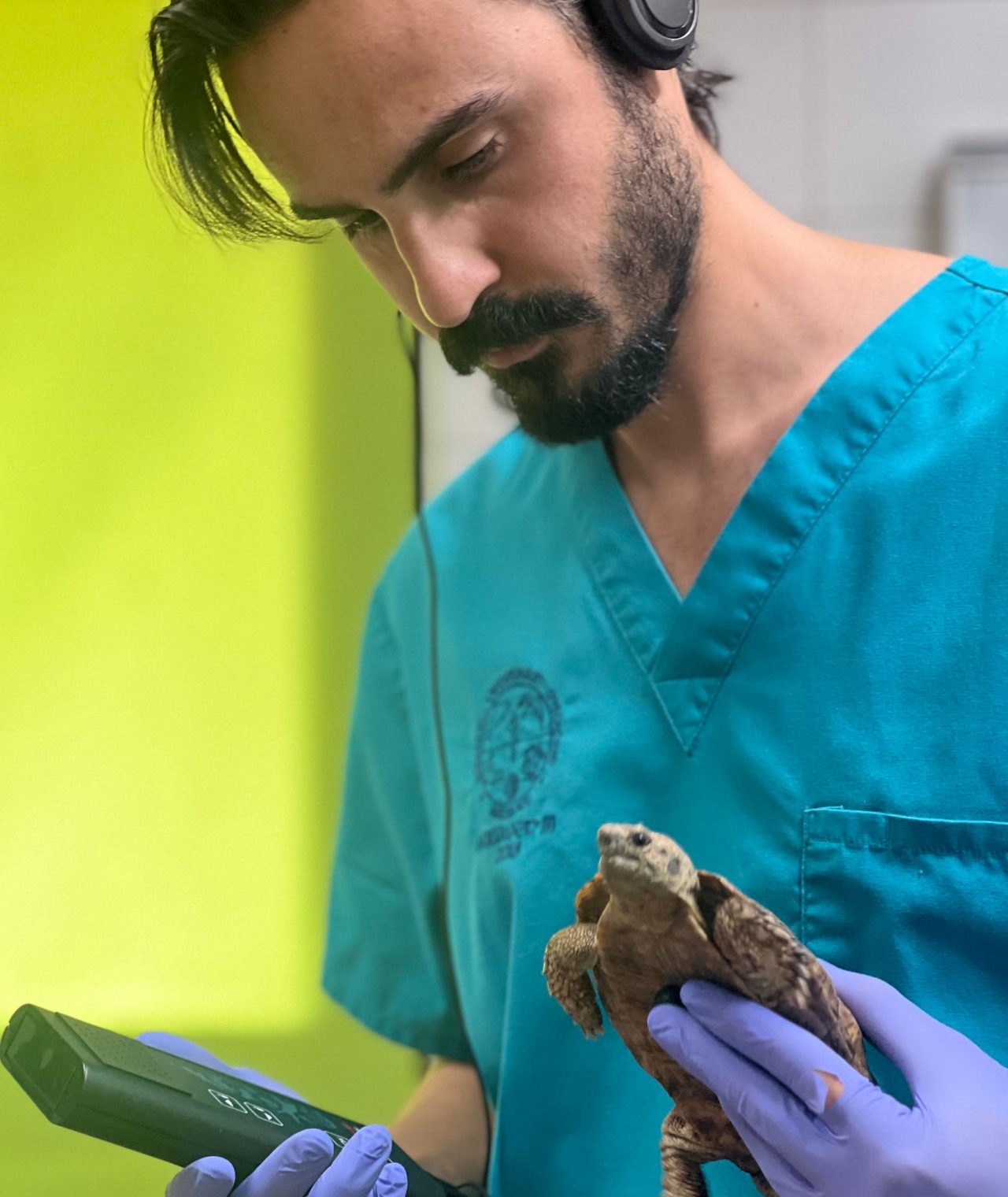
In our case, as these internships are exclusively for the Veterinary Medicine degree, students are assigned to the clinic, allowing them to observe cases from all areas of the park. However, we are not the only department involved in student training, as many students from other degrees such as Biology and Environmental Sciences also complete their internships in the Conservation Department.
For us, it is also a moral responsibility to give back to the faculty and the profession the opportunity we were given as students, which ultimately enabled us to be working at Faunia today.
Have any of these young people later joined Faunia’s workforce? Are there any specific examples worth highlighting?
Yes, several young people who completed internships have continued their careers in the sector after their time at Faunia. In fact, the three current members of the veterinary team all began our professional journeys as interns in parks within the Group, both at Zoo de Madrid and at Faunia.
Between November 2024 and March 2025, one of our most outstanding students temporarily joined the veterinary team to cover a leave of absence, demonstrating a high level of preparation. He is currently developing his career at another Spanish zoological institution. In addition, many of our former interns now work in wildlife recovery centers, zoological institutions and specialized exotic animal veterinary clinics of the highest level, reflecting the positive impact these internships have had on their professional development.
The experience from within: the testimony of a former intern
We also wanted to include the testimony of Jorge Sobrino Yacobi, a 25-year-old student who completed extracurricular internships with Faunia’s veterinary service in February 2022, March 2023 and November 2023 as part of his Veterinary Medicine degree. During the 2022/2023 academic year, he also completed an internship in the Venom Section (Faunia’s reptile house) and developed his Final Degree Project at the park.
What did completing internships at Faunia mean for you?
My internships at Faunia represented a true immersion into the world of zoological medicine. They allowed me to understand first-hand how a zoo’s veterinary service operates, while also establishing very valuable professional contacts. I had the opportunity to learn from people I now consider role models, mentors and friends, and the experience reinforced my motivation to continue specializing in this field.
The experience at Faunia has also opened doors for me to complete internships at other zoos, both in Spain and in the United States. It was an environment where I was able to grow both personally and professionally, developing practical skills, clinical judgement and a broader, more realistic understanding of the role that zoos play in conservation, education and research.
What did the internships involve and what did you learn on site at the park?
During my internships with the veterinary service, I worked closely with the park’s veterinarians at all times, observing first-hand and actively participating in all types of procedures. These included anesthetic procedures, full clinical examinations of wildlife, interpretation of hematological and biochemical tests, administration and adjustment of medication, preparation of animals for surgical procedures and anesthetic monitoring. I also collaborated in surgeries, wound treatments, imaging studies, coprological examinations and necropsies. I had the opportunity to work with a wide range of species, including manatees, pinnipeds, primates, small mammals, birds, crocodiles and other reptiles.
Additionally, my internships in the Venom Section allowed me to learn about the husbandry, biology and management of numerous species of reptiles, amphibians and arthropods, many of them endangered, alongside professionals considered leading figures in herpetology in Spain and Europe. Álvaro, head of the pavilion, is an expert in his field and deeply passionate about sharing his knowledge.
It is difficult to summarize everything I learned at Faunia: from routine tasks such as using an automated hematology analyzer, to understanding the many complex factors that zoo veterinarians must consider depending on the species being treated. I also gained insight into the internal workings of a modern zoo that is part of associations such as AIZA and EAZA, and is committed to conservation, public education and the development of research projects.
I would particularly highlight the vote of confidence that Faunia’s veterinarians place in their students. From day one, you are fully integrated into the team, involved in procedures and made to feel useful, always under appropriate supervision. The kindness, availability and genuine interest in teaching shown by the entire team are, in my opinion, among the main reasons why so many students choose Faunia and leave with such a positive experience.