Halloween: A Season of Its Own | Faunia

Madrid, August 20, 2026 - Every visit to one of our animal parks supports something far greater than a memorable day out.
Across Parques Reunidos, our animal parks play an active role in protecting biodiversity through conservation programs, scientific research, education, and the highest standards of animal care. Working alongside universities, veterinarians, conservation organizations, and fellow zoological institutions, our teams contribute knowledge and expertise that help safeguard endangered species—not only within our parks, but in the wild.
This work often happens quietly, behind the scenes. It involves years of collaboration, scientific research, and dedication from experts whose goal is simple: to give threatened species a better chance of survival.
A remarkable new project led by our colleagues at Blackpool Zoo is a perfect example of how science and conservation can come together to make a meaningful difference.
Together with researchers from the University of Lancashire, the team has helped develop an innovative rapid diagnostic test for Elephant Endotheliotropic Herpesvirus (EEHV), one of the greatest threats facing young elephants worldwide.
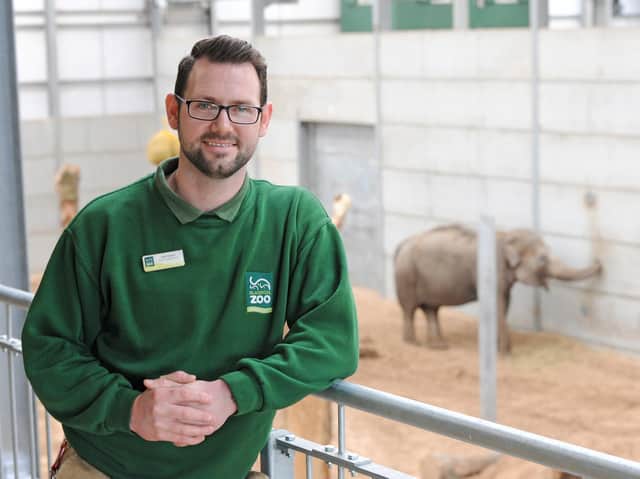
To understand more about this important milestone, we spoke with Adam Kenyon, Section Manager of Mammals at Blackpool Zoo.
· Can you tell us about the project and why it represents such an important breakthrough?
The project uses special technology that was initially developed during the COVID-19 pandemic. Technology has now been adapted by specialists at the University of Lancashire to test for the presence of EEHV in elephants by analysis samples from their faeces and saliva. The use of this pioneering 'LAMP' is significantly import for two reasons; the first reason is that in the suspected event of an EEHV outbreak in young elephants, detection and response time is critical, the LAMP will potentially provide us with a positive result, indicating that EEHV is present, within 30minutes. A result that may otherwise take up to 24-48 hours to receive, at which point it may be too late. The second reason is that EEHV is present in wild elephants and the virus has evolved with the species over hundreds of years. The LAMP test is a portable device that can be taken into the field in which to test faecal samples from wild elephants and help us to better understand its presence amongst in-situ species, ultimately enabling us to develop our management of the virus within our captive populations.
· For those who may not be familiar with it, what is Elephant Endotheliotropic Herpesvirus (EEHV) and why is it such a serious threat to elephant conservation?
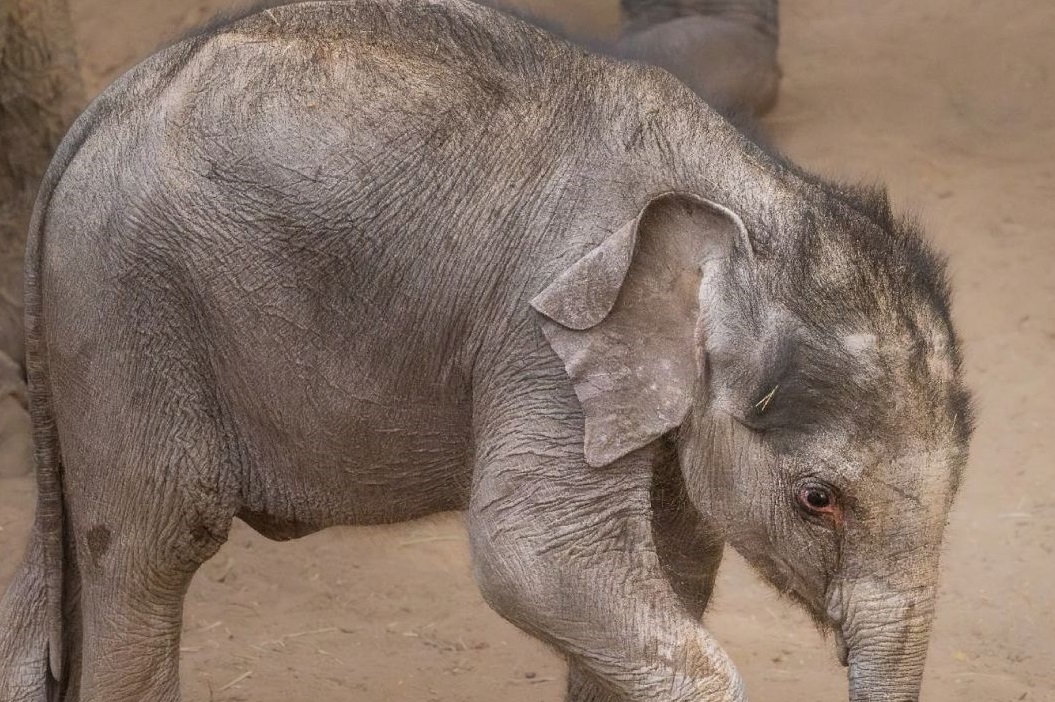
EEHV is an elephant-specific virus that can develop into a fatal hemorrhagic disease (EEHV-HD) amongst young elephants. Much like the herpes simplex in humans in which we all carry, all elephants carry the EEHV virus and develop antibodies against the disease as they grow. However, EEHV is specific to elephants and there are several strains of the virus that are currently known to science. As a result, some elephants may not have developed antibodies for certain strains if they have not been exposed to them. As with most species, their immune systems are developed as they grow, resulting in a better immunity against disease. In this case, low immunity impacts the individual's ability to fight the virus should it be exposed to it, which often results in fatality. Currently the mortality rate for young elephants which contract the disease is almost 100%.
EEHV is devastating for elephants, particularly those under 12 years of age and it is this younger generation that are so important to the care of the species as a whole, careful genetic management and breeding through EEP's (EAZA Ex-situ Programme formally European Endangered species Programme) are fundamental to the conservation of elephants, if EEHV continues to compromise our younger generations within these programmes then the future of this incredible species is bleak.
· How does this new molecular test work, and what makes it different from existing diagnostic methods?
The new test will enable us to use non-invasive techniques to obtain genetic material from elephants' faeces and/or saliva which can then be analyzed by the LAMP device and tell us within 30 minutes whether EEHV has been detected, this information will enable treatment plans to commence straight away. Currently the only way to confirm the presence of EEHV is to obtain a blood sample (which may be difficult from a young or sick animal) and send this away to a specialist laboratory to run it through a PCR (Polymerase chain reaction) machine. A process that can take significantly longer (up to 48-72hrs) depending on when the virus is initially suspected.
· One of the most exciting aspects of the project is that it can also be used in the field. How could this help conservationists working with wild elephant populations?
EEHV has evolved with elephants for hundreds of years. In captivity to date there are up to 14 genetically distinct strains of the virus that have been identified, some of which are endemic to Asian elephants and some to African elephants. These have been categorized into 7 major species of the virus which include further sub-types, such as 1a & 1b, and so forth. So, this virus is extremely complex. The LAMP test could help us to obtain further information as to the evolution of this virus and inform future management of the disease such as vaccines, treatment plans etc.
There are two vaccines that have already been developed over the past 12 months, one here in the UK and one in the USA, but these only target specific strains at this stage, and although early results look promising, it is still too early to tell whether they will be successful in preventing further deaths. So, the more information we can continue to obtain, and share is fundamental to this success. Obtaining non-invasive samples from wild elephants in range countries to be analyzed by the LAMP device will add to our knowledge bank.
· What does this collaboration say about the role modern animal parks play in conservation and scientific research?
I believe that collaborations such as this highlight the significant role of the modern zoo or animal park. It is something I like to describe as “silent conservation” whereby science is used to protect a species. It's not the breeding or re-introduction of species, but it is equally important, as if we do not understand, if we are not informed, then we cannot work together to effectively protect a species. In the case of this ‘silent conservation’ project, the ease in which samples can be safely obtained, and the quantity which can be provided enables robust research to be undertaken. It is our close relationship with the species in captivity that leads to significant understanding and developments in how we can protect them in the wild.
· Looking ahead, what are you most hopeful this project will achieve for elephants around the world?
This project is extremely exciting for us, and for me, personally having experienced the catastrophic effects of EEHV-HD earlier in my career, I am extremely proud of this partnership.
Early detection of the EEHV virus is crucial in the decisions that follow and the ultimate outcome. Put simply “the earlier you detect it, the earlier you can act” and that action WILL save an elephant's life.
We are incredibly proud of the Blackpool Zoo team and everyone involved in this pioneering research. Their work is another reminder that every breakthrough—whether it happens in a laboratory, a veterinary facility or a zoological park—brings us one step closer to securing a future for some of the world's most iconic and endangered animals.