Connecting Continents for Conservation: Parques Reunidos at the Global Panda Partners Conference 2026
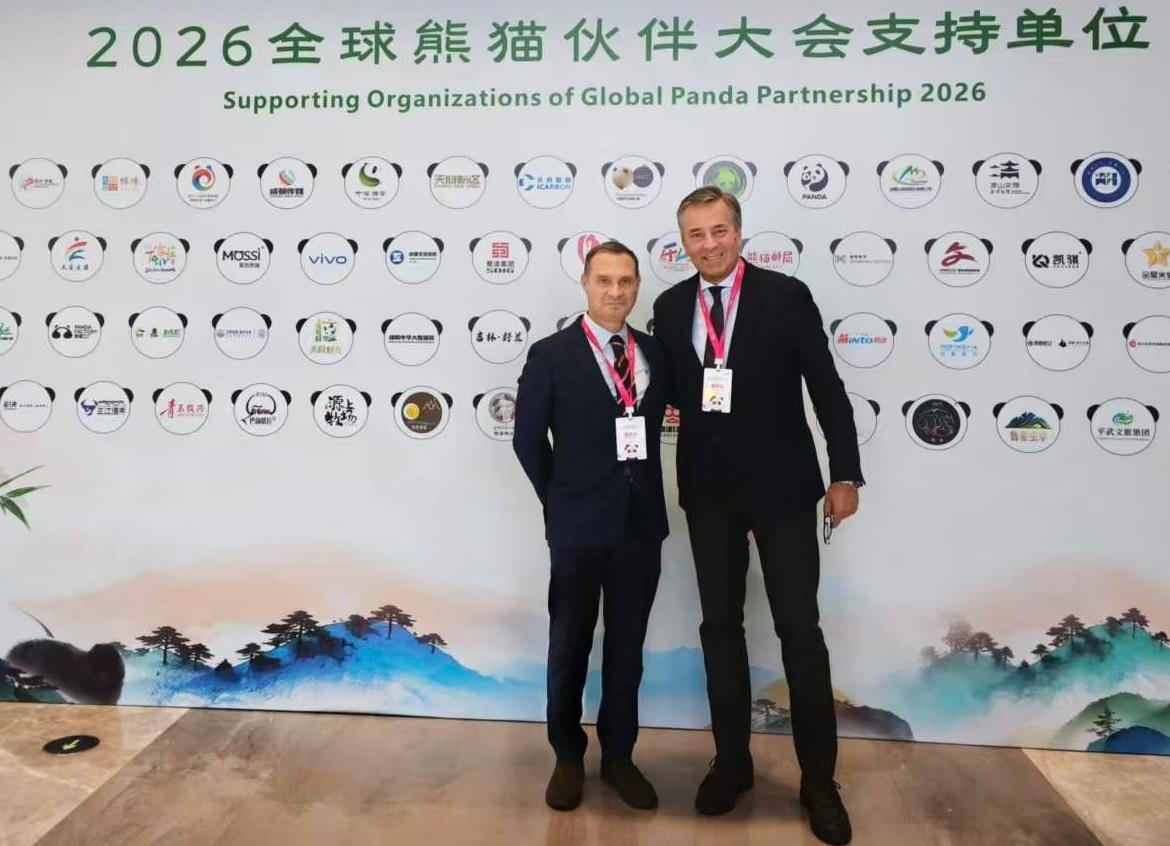

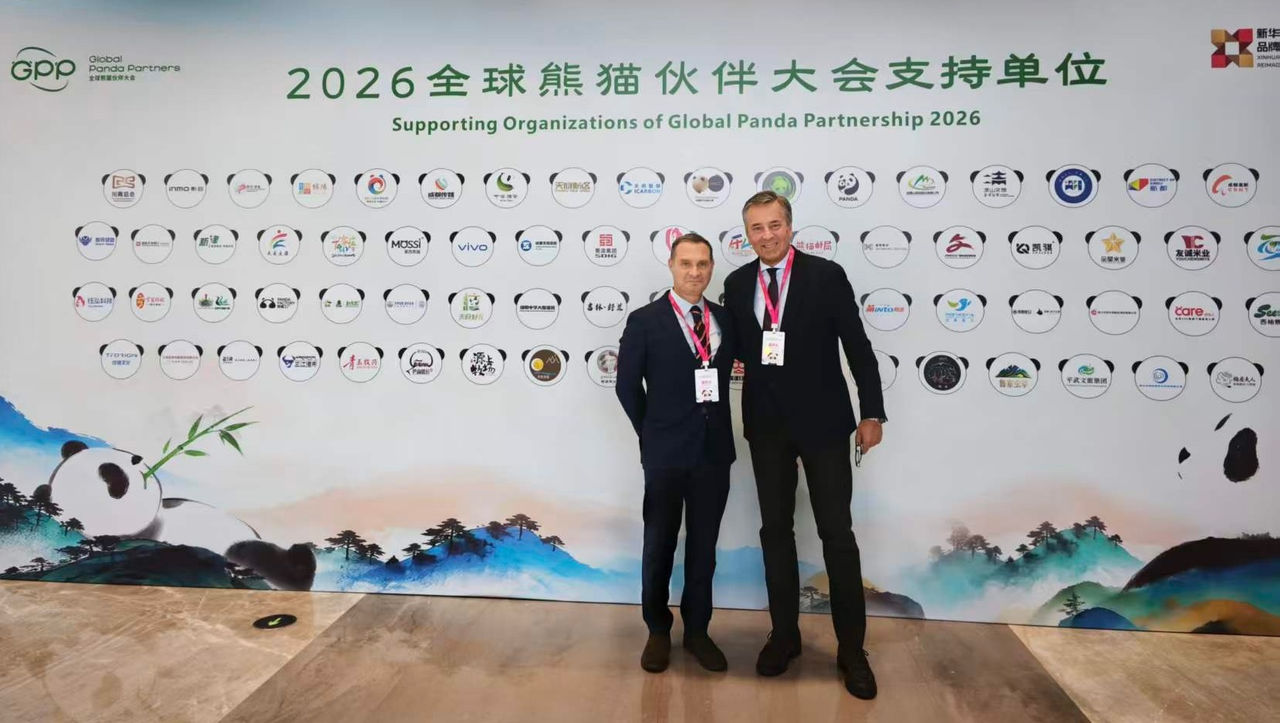
Madrid, November 17 2026 -Enrique Pérez, Director of Zoo Aquarium de Madrid, and Agustín López, Group Conservation Director at Parques Reunidos, share their perspectives on international cooperation, scientific research, and the future of giant panda conservation.
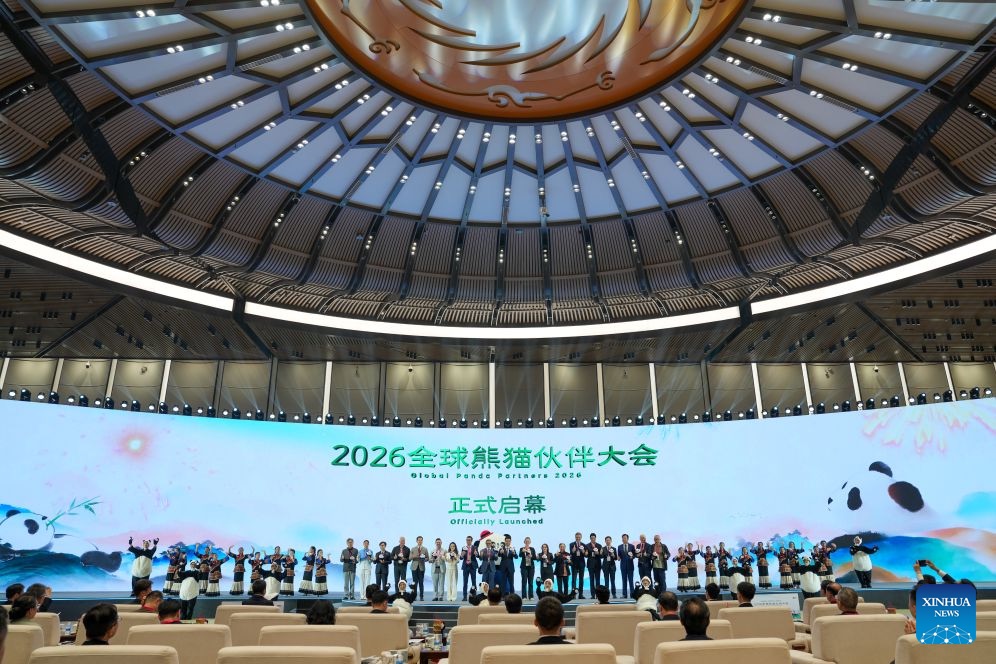
From November 2 to 4, Chengdu, China, hosted the Global Panda Partners Conference 2026, bringing together hundreds of scientists, conservation specialists, and institutional representatives from more than 30 countries and regions. The international gathering provided a platform to exchange scientific knowledge, strengthen partnerships, and explore new approaches to giant panda conservation and biodiversity protection.
Parques Reunidos was represented by Enrique Pérez, Director of Zoo Aquarium de Madrid, and Agustín López, Group Conservation Director, reflecting the Group's longstanding involvement in international conservation initiatives.
Zoo Aquarium de Madrid's relationship with Chengdu dates back to 2007, when its collaboration with Chinese conservation institutions began. Since then, the partnership has contributed to research, breeding, and knowledge exchange, with six giant panda cubs born at the Madrid animal park since 2010.
This collaboration illustrates the importance of sustained international partnerships in protecting endangered species and advancing scientific understanding.
Following the conference, we spoke with Enrique and Agustín about the significance of the event, the lessons learned, and the role that zoological institutions can play in the future of wildlife conservation.
Enrique Pérez | Director, Zoo Aquarium de Madrid
Zoo Aquarium de Madrid has maintained a close relationship with Chinese conservation institutions for nearly two decades. What have been the most significant achievements of this partnership, and how has it evolved over the years?
One of our greatest achievements is the continuity of this partnership. For nearly two decades, Zoo Aquarium Madrid and our Chinese partners have built a strong relationship based on trust, scientific cooperation, and a shared commitment to giant panda conservation.
The results speak for themselves. Since 2010, six giant panda cubs have been born at Zoo Aquarium Madrid, a remarkable achievement made possible by the combined expertise and dedication of the specialists at the Chengdu Research Base of Giant Panda Breeding, INIA, and our own Conservation and Veterinary teams.
But our collaboration goes far beyond successful breeding. Over the years, it has become a valuable platform for exchanging knowledge and expertise in animal care, veterinary medicine, and conservation.
For me, that is the real strength of this partnership: nearly two decades of working together, learning from one another, and achieving results that no institution could accomplish alone.
Beyond scientific research and breeding programs, what role do modern animal parks play in raising public awareness and encouraging active engagement in biodiversity conservation?
They have an essential role to play in conservation, not only through scientific research and breeding programs, but also by helping people connect with wildlife and understand why protecting biodiversity matters.
Every year, millions of visitors have the opportunity to discover extraordinary species, learn about the threats they face, and develop a deeper appreciation for the natural world. That emotional connection can be a powerful starting point for conservation awareness.
Awareness, though, is only the beginning. Our responsibility is also to inspire action, helping visitors understand how their everyday choices can contribute to protecting biodiversity.
At the same time, modern animal parks actively support conservation projects in the wild, scientific research, professional training, and international cooperation.
Ultimately, our role is to connect people with nature while contributing to the scientific knowledge and collective action needed to protect it.

Agustín López | Group Conservation Director, Parques Reunidos
The Global Panda Partners Conference brought together experts from around the world. What were the most relevant scientific developments or conservation priorities discussed, and what stood out to you?
One of the most encouraging messages was the progress achieved in giant panda conservation. In the 1980s, there were an estimated 1,100 giant pandas in the wild. Today, that number has risen to approximately 1,900. The species has also moved from Endangered to Vulnerable on the IUCN Red List.
These achievements demonstrate that sustained, coordinated conservation efforts can deliver meaningful results.
However, progress does not mean the work is finished. One of the key priorities discussed was the need to strengthen conservation in the wild by protecting and connecting habitats and ensuring the long-term sustainability of wild populations.
This must go hand in hand with strong ex situ conservation programs, maintaining healthy, genetically sustainable populations under human care while advancing research and scientific cooperation.
For me, the most important takeaway was the need to connect these two approaches. Conservation in the wild and conservation under human care are not competing priorities. They are complementary efforts that, when combined, can make a real difference to the future of threatened species.
Giant panda conservation is often highlighted as an example of successful international cooperation. What lessons can be applied to the protection of other endangered species, and how do these insights inform Parques Reunidos' broader conservation strategy?
The most important lesson is that conservation succeeds when different organizations work together toward a shared, long-term goal.
No single institution can protect a threatened species alone. Meaningful progress requires cooperation among public authorities, scientists, NGOs, conservation organizations, and modern animal parks, each contributing its own expertise and resources.
We have an excellent example in Spain with the Iberian lynx. Its recovery shows how coordinated efforts involving habitat protection, scientific research, breeding programs, and reintroduction can help reverse the decline of a highly threatened species.
Parques Reunidos contributes to this conservation effort through Zoo Aquarium Madrid and Selwo Aventura, both of which participate in programs involving Iberian lynx.
Our contribution goes beyond caring for animals under human care. It means being part of a wider conservation network, supporting scientific research, sharing expertise, raising public awareness, and collaborating with the institutions responsible for protecting species in the wild.
This is central to our conservation philosophy at Parques Reunidos: combining in situ and ex situ conservation as complementary elements of a broader strategy.
The giant panda and the Iberian lynx are powerful reminders that even the most complex conservation challenges can be addressed when institutions combine their knowledge, resources, and long-term commitment.
Looking ahead | Enrique Pérez & Agustín López
Looking to the future, what are the next priorities for our collaboration with Chinese conservation institutions, and how can Parques Reunidos continue contributing to global biodiversity conservation?
Enrique: Our priority is to build on nearly two decades of successful cooperation with Chinese conservation institutions, strengthening scientific collaboration, exchanging expertise, and continuing to support research and breeding programs that contribute to giant panda conservation.
This partnership has also benefited from a strong framework of institutional cooperation between Spain and China. On the Spanish side, the involvement of the Ministry for the Ecological Transition and the Demographic Challenge (MITECO) is particularly important in providing continuity and connecting these initiatives with broader biodiversity conservation objectives.
Looking ahead, we want to strengthen the connection between conservation programs under human care and efforts to protect species and habitats in the wild.
Agustín: For Parques Reunidos, this also means expanding the contribution our parks make to international conservation networks through scientific research, population management, veterinary expertise, education, and public awareness.
The challenges facing global biodiversity are too complex for any single organization or country to address alone. The giant panda is an inspiring example of what sustained international cooperation can achieve.
Our ambition is to build on that experience, strengthening existing partnerships and applying the lessons learned to help protect other threatened species. Because the future of conservation depends on what we can achieve together.