What Eight Countries Have Taught Me About Leadership

Madrid, November 10 2026 -One of the privileges of my role is that, on any given day, I may be speaking with colleagues in Spain, Germany, Italy, Belgium, the Netherlands, Norway, Denmark, or France.
I’m French, was born in Africa, live in Spain, and have spent significant parts of my career in France and the Netherlands.
Moving between cultures has shaped me for years. But leading an international business has taught me something even more important:
Great international organizations don’t succeed by making everyone work the same way.
They succeed by being crystal clear about what must be shared — purpose, values, standards, and ambition — while giving people the freedom to bring their own culture and perspective to how they deliver it.
Because the people closest to the guest usually understand the guest best.
At Parques Reunidos, some of our parks have been part of their communities for generations. They have their own personalities, traditions, and relationships with their guests.
That local identity is not something to standardize away.
It is an asset.
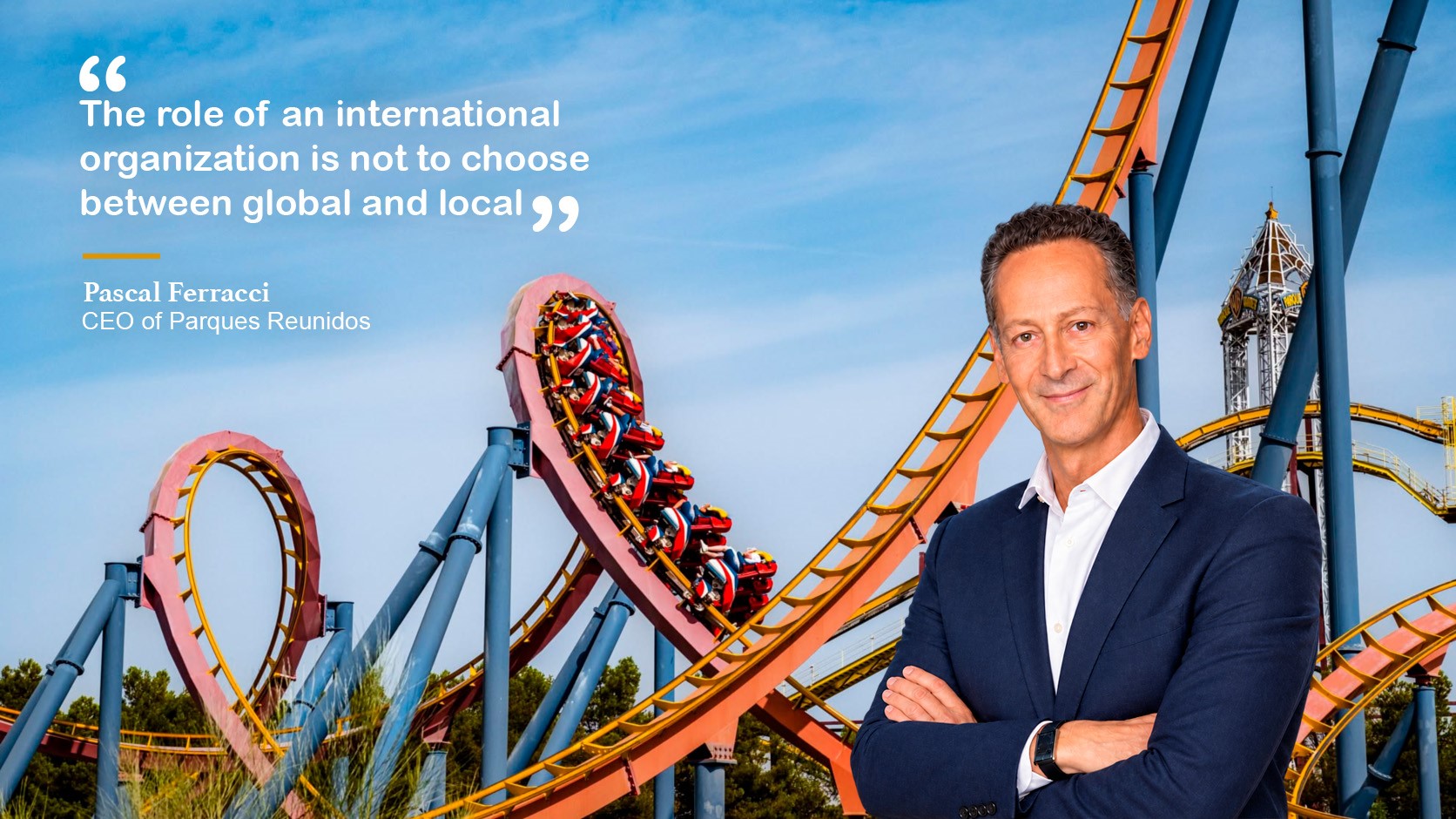
The role of an international organization is therefore not to choose between global and local.
It is to know what should be global, what should remain local, and where scale genuinely creates value.
Technology, data, safety, procurement, and shared expertise can benefit enormously from scale.
But many decisions are simply better made close to the guest.
And leading across cultures has taught me another lesson:
Listening — and being heard — is not the same everywhere.
An idea expressed directly in one culture may be introduced cautiously in another. Silence can mean different things. Disagreement can take very different forms.
As leaders, our job is not to expect everyone to adapt to us.
It is to become better at understanding them.
And perhaps the most rewarding part is what happens beyond the differences.
Different languages.
Different cultures.
Different ways of working.
One shared ambition: creating experiences that people want to come back to.
That may be the real privilege of leading across eight countries.
You discover that there is no single European way of doing things.
And that is precisely what makes Europe — and European companies — so fascinating to lead.