Halloween: A Season of Its Own | Faunia
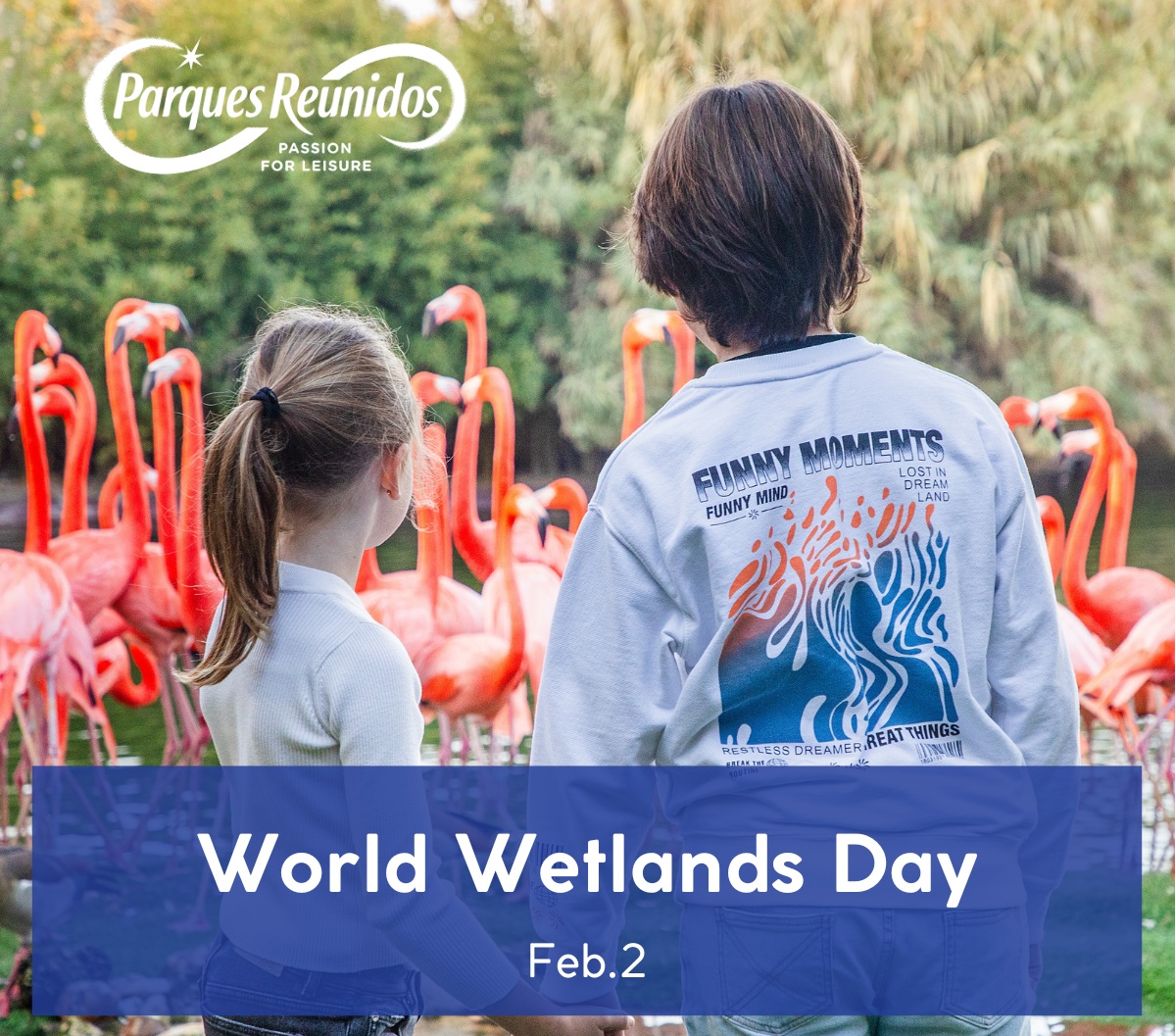
Wetlands are among the most valuable ecosystems on the planet and also among the most threatened.
They provide clean water, support extraordinary biodiversity, help mitigate climate change and sustain human livelihoods. Yet wetlands are disappearing faster than forests worldwide, putting countless species and communities at risk.
In response to this global challenge, Parques Reunidos has joined the European Association of Zoos and Aquaria (EAZA) Conservation Campaign 2026–2027: Wetlands for Life. This two-year international initiative mobilizes zoos and aquariums across Europe and beyond to raise awareness, support conservation projects and inspire action to protect, restore and create wetlands.
This collaboration reflects a shared conviction: protecting wetlands requires long-term commitment, scientific knowledge and public engagement.
Why Wetlands Matter
Wetlands take many forms: from rivers, lakes and marshes to mangroves, estuaries and even coral reefs. According to the Ramsar Convention, they are essential for water purification, flood control, carbon storage and biodiversity conservation, yet more than one third of the world’s wetlands have already disappeared due to pollution, climate change, and land conversion.
As part of the Wetlands for Life campaign, flamingos act as the ambassador species, symbolizing both the beauty and fragility of these ecosystems. Found in wetlands across the globe and present in a large proportion of EAZA institutions, they help connect visitors emotionally to the conservation message.
From Awareness to Action
Parques Reunidos participation in the campaign goes beyond communication. With coordination and funding provided by Fundación Parques Reunidos, the group is implementing a comprehensive approach that combines conservation, education and operational improvements .
Key actions include:
· Financial support for international wetland conservation projects through Fundación Parques Reunidos.
· Education and public awareness, using signage, social media and educational talks aligned with EAZA guidelines to engage visitors of all ages.
· Habitat transformation, converting artificial lakes into naturalized, self-sustaining wetlands that attract local birds, reptiles and invertebrates. One example is the transformation of the pelican lake in Faunia from a chlorinated pool into a functional wetland through riparian vegetation restoration.
· Improving wetland-themed habitats, such as enhancing existing facilities to host species closely linked to wetland ecosystems, including mangrove and freshwater species.
· Water management improvements, reducing chemical use, upgrading filtration systems, improving energy efficiency and aligning water quality more closely with natural conditions.
To better understand how this work is coordinated behind the scenes, we spoke with Marcos Peromingo Quesada, Biodiversity Coordinator and member of the Technical Office for Conservation.
What does it mean to be part of the EAZA “Wetlands for Life” campaign?
Being part of an EAZA conservation campaign means working within a coordinated, science-based framework shared by hundreds of institutions. It ensures that our actions, from education to fundraising, are aligned, credible, and focused on real conservation impact over the long term.
This is a two-year campaign. Why is long-term engagement so important for wetland conservation?
Wetland conservation cannot be addressed through one-off actions. Ecosystem restoration, behavioral change, and community engagement take time. A two-year program allows us to build consistent messaging, implement structural improvements and keep wetlands present in the public conversation beyond key awareness days.
How does education play a role in this campaign?
Education is central. Through talks, signage, social media and outreach activities, we help visitors understand why wetlands matter, what threatens them and how individual actions, such as responsible water use, can make a difference. EAZA provides excellent education toolkits that help ensure our messaging is engaging, accurate and accessible.
What makes zoos and aquariums uniquely positioned to lead this type of campaign?
Zoos and aquariums create a direct, emotional connection between people and nature. Each year, we reach millions of visitors and have the ability to translate complex scientific concepts into experiences that are accessible, engaging and meaningful; a powerful combination for driving conservation awareness and action.
Beyond showcasing distant and threatened ecosystems, animal parks also play a crucial role at a local level. Any pond, lake or lagoon is considered a wetland, which means our parks themselves function as living ecosystems. Institutions such as Zoo Aquarium de Madrid, Faunia and Selwo Aventura provide vital wetland habitats within their grounds, supporting a wide range of local biodiversity through their naturalized water bodies.
Zoo Aquarium de Madrid acts as an important ecological buffer and nesting site within the Casa de Campo, one of Madrid’s most valuable natural environments. Faunia, with its two naturalized lagoons, offers a resting and refuge area for numerous bird species arriving from the nearby Parque Natural del Sureste. Selwo Aventura, through its large central lake, serves as a key stopover point for migratory birds travelling between Africa and Europe.
This unique combination of global conservation messaging and local ecological impact is what places zoos and aquariums in a uniquely strong position to lead campaigns such as Wetlands for Life, connecting people not only with wildlife from around the world, but also with the wetlands that exist and matter in their own communities.
What would you like people to take away from the “Wetlands for Life” campaign?
That wetlands are not distant or abstract ecosystems. They are part of our everyday lives. Protecting them protects biodiversity, water resources and our own future. Everyone has a role to play.